Leaving Fargo, I had run out of options. Not the logistical kind—the deeper ones. The tricks I’d relied on were spent: the scanning, the planning, the constant attempt to outthink my own unease. I was tired of gripping the wheel like I could force something good to happen if I just tried hard enough.
So I gave up.
Not in despair, exactly. More like a quiet concession to whatever wanted to move me next. I let life take the wheel.
It was then that I decided to try something different. I closed the map on my phone and drove. I wanted to experiment with another form of navigation—my intuition.
About a mile later, on a backcountry road, I saw my first state sign for The Land of 10,000 Lakes, Minnesota.
Later, I would read that Minnesota’s lakes have a total shoreline longer than the entire coastline of the United States. That fact alone explains my next observation: boats were everywhere. In farmers’ fields. In front yards. Leaning against outbuildings. The sheer volume was undeniable.
After how painfully the previous night had gone, I knew how important it was to take my time.
Farmland stretched on either side of me in long, uninterrupted distances. When I reached a stop sign, I’d look left, then right, and ask myself which way I wanted to go. I can’t say for sure that I didn’t end up driving in a square—but I didn’t care. The entire point of the exercise was mandated carefreeness.
When I saw a sign for Wolf Lake, I knew immediately it would be my next destination. For one thing, I’d been fantasizing about a comfortable catnap. For another, it offered a chance to tend to basic hygiene.
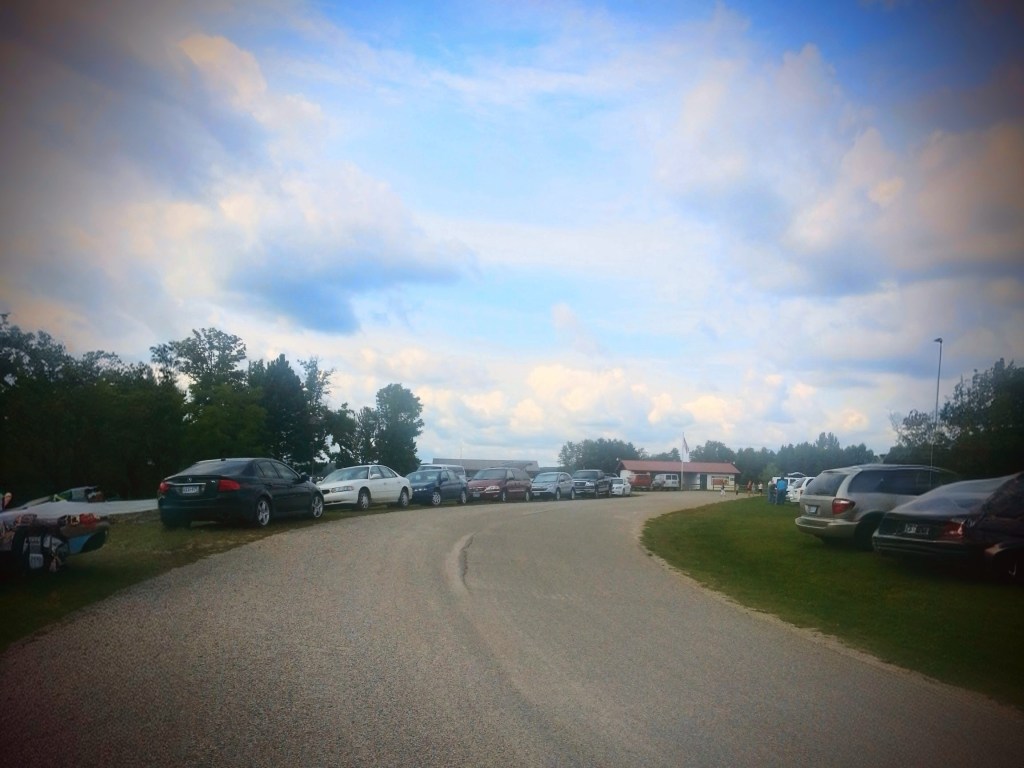
Pulling into the single-lane blacktop drive, I was surprised by how full the lot was. Minnesota license plate after Minnesota license plate lined the parking area, and I braced myself for having to turn around and park along the road. Just as I did, my vantage point shifted, revealing a single open space tucked away like a secret. Grateful for the find, I slipped right in.
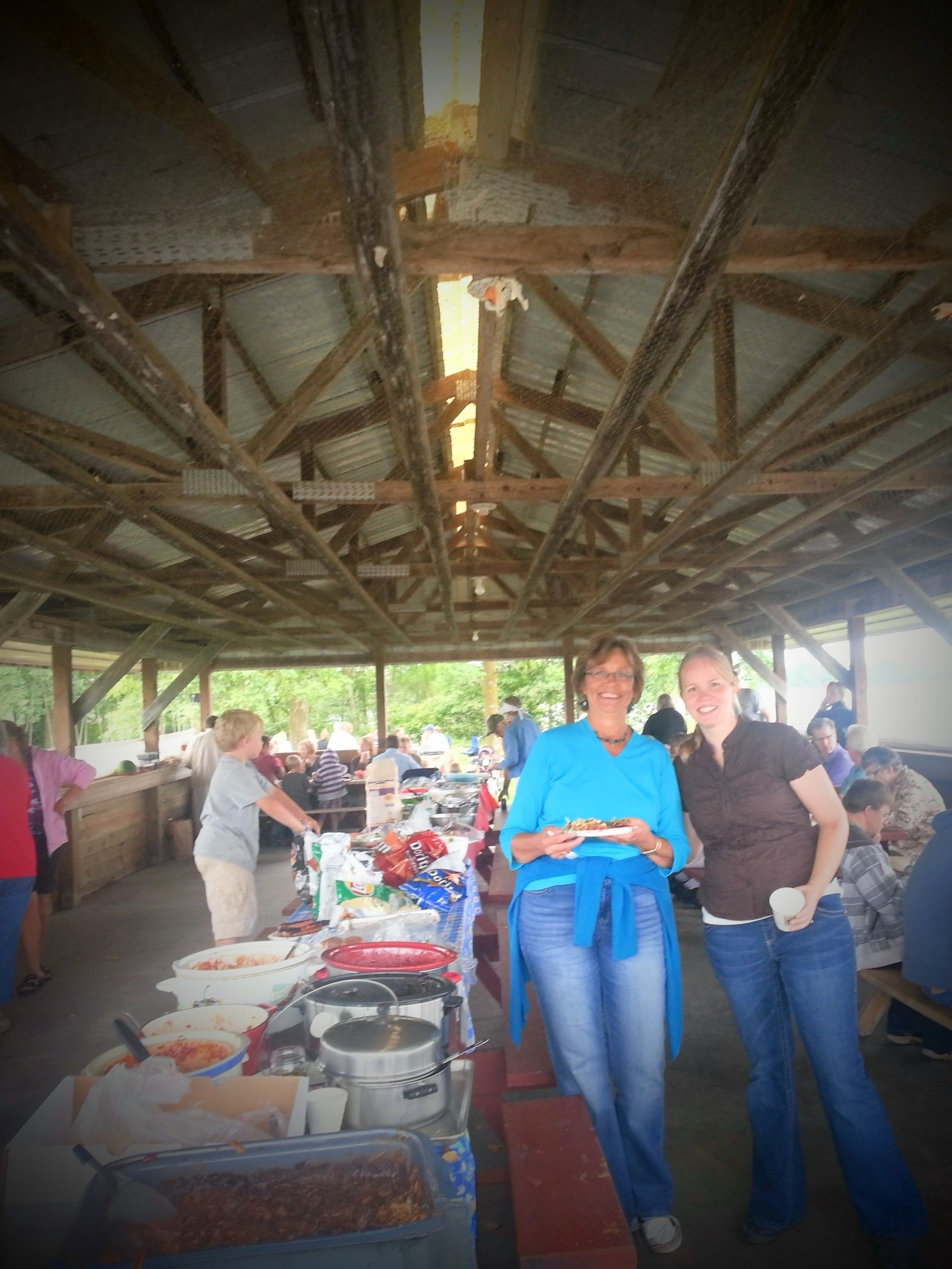
I surveyed the scene. Just under a hundred adults and children gathered near a large gazebo. Most of the adults held plates of food, chatting in clusters, while children ran in every direction, taking turns on the swings. I turned back to my car, amused by my lone Washington plate among a sea of Minnesotans, and took a photo.
When a woman peeled away from the group and headed toward a van parked beside mine, I asked her what was going on.
“Oh,” she said—soft blue eyes, wide white smile, freshly curled bangs bouncing as she turned back toward the crowd. “We’re having a family reunion.”
I looked again—really looked. At the clusters of strollers. The women are my age, many of them pregnant. The toddlers with identical blond hair orbiting the gazebo like loose satellites.
“That’s a big family,” I said.
“This isn’t even all of them,” she replied. “Only about half made it.”
She said it casually, then, as if reading my face, she added, “They don’t believe in birth control. It’s a strict Finnish religion called Laestadianism.”
Perhaps catching a flicker of my unease, she said, “I left years ago. My family’s kind of the outcast here.”
Outcast. The word landed like a warm hug. Like colors in a gang. She was my kind of people.
When I told her I was traveling alone, she laughed. “And you just stumbled onto Wolf Lake? How in the world did you do that?”
Remembering my intentional mandate to let go of expectations, I said, “I don’t really know. I just drove.”
She tilted her head, then smiled. “Hey—I have an idea. Why don’t you come get some food? Most of them don’t even know each other. They’ll probably just think you’re my son’s girlfriend.”
So I did.
And for the first time, I wasn’t inside a system trying to survive it. I was witnessing systems from the outside—watching how belief organizes bodies, choices, reproduction, and loyalty.
No one here looked panicked. No one looked trapped. Talking with women my age—most with four or five children and pregnant—we browsed each other’s lives like artifacts from a rarely opened museum. Still, there was food, laughter, and coordination. Children were passed from hip to hip without question. The system worked—at least on the surface.
And standing there, anonymous, my Washington plate tucked between rows of Minnesota ones, I felt the strange relief of not belonging to anything at all.
 Going On 40
2 thoughts on “Letting the Road Decide (Book Part 38)”