
After the family reunion, my answer—“I don’t know”—when asked where I was headed next, earned me an invitation to stay with Brita and her husband, Howard, in Cokato, Minnesota.
They gave me the third floor of their home—my own room, my own bathroom, a window looking out over their grain bin and lush August garden. I kept thinking the same thing over and over: someone pinch me. The generosity of it all felt unreal.
I tagged along, woven into the fabric of their life. Morning coffee gatherings in town—Brita and me in one room with the women, Howard in the other with the men. The annual Corn Festival and parade. Family meals where her daughter, close to my age, and her two older sons came over, and everyone knew their role: who set the table, who cleared it, who washed, who dried. Conversation flowed easily—politics and current events discussed without feathers rustling or threat. At Brita and Howard’s table, ideas were shared and worked through, advancing everyone together to a new understanding.
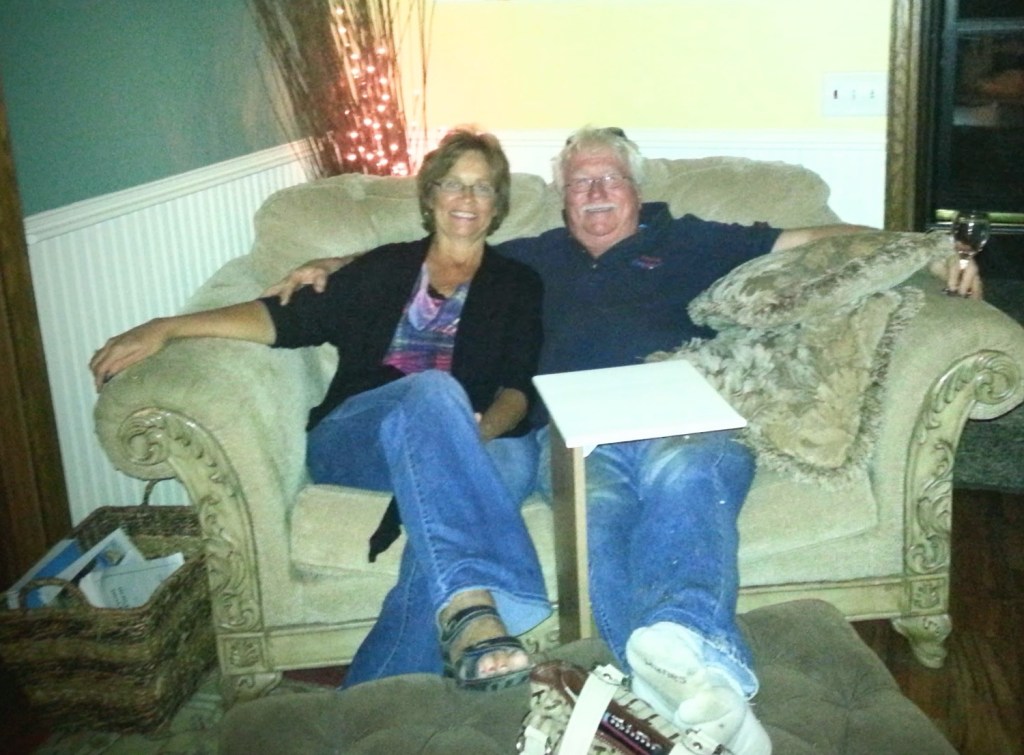
Their home was a gathering place. One Saturday afternoon, I fell in line for cleanup. There were six of us. It felt oddly nautical, like a naval ship—one I imagine my grandfather, a Lieutenant Commander, directing. The ease of taking orders: sweeping, mopping, folding clothes, dusting, putting dishes away. No one dragged their feet or complained. Even though I might have preferred a book and the sun, belonging with this group of capable adults—and being treated as an equal—filled me up.
One afternoon, I asked Brita about a little thorn in my shoe, about all the children her extended family had. Fifteen to twenty of them? I heard it afterward—the edge in my voice, a tinge of judgment I hadn’t fully caught in time.
She heard it.
“I can understand why you’d think that,” she said gently. “But think about it this way. These families—the ones you’ve met—are raised with strong morals, values, and a work ethic. No one gets away without doing their fair share.”
She used one family from her extended circle as an example.
“Every single kid has gone to college or into a trade. Honest to God—one’s a lawyer, another a doctor, an architect, a dentist, a police officer. Growing up, they wore hand-me-downs. They ate food they planted. They repurposed materials to build what they needed. Not one of them is a burden on society.”
I listened, feeling something shift—not into agreement exactly, but into her perspective.
“Now,” she continued, “take children born into poverty. One, two, maybe three kids. You’ll often see the cycle of dependence repeat.”
Then she told me a story.
“After my brother’s family came over for dinner, they were getting ready to leave. Their two-year-old suddenly ran back into the house and came out carrying his own diaper bag.” She shook her head, still amazed. “I couldn’t believe it. He grabbed it himself. But when a child learns early that they take care of themselves—that they’re not more entitled than anyone else—they grow up with that mentality.”
I sat with her words, noticing my inner landscape shift.
After cleaning, we got the stamp of approval from Brita, and I watched Jack, her eldest son, walk out of the barn with two fishing poles.
“Ready?” he asked.
I nodded, already halfway lost in thought, eager to disappear into their backyard – endless acres of tall grasses and the S-curved river.
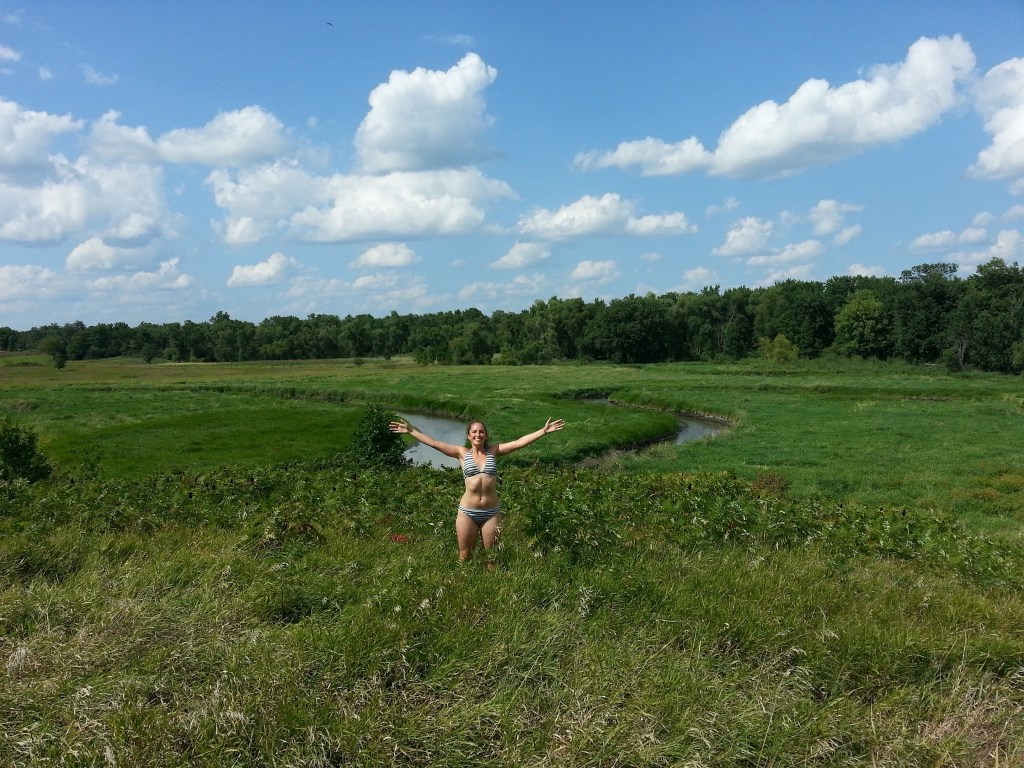
With no path, we trailblazed by default. A small creek came into view, and Jack told me we’d need to wade through it to reach the river. The sandy clay sucked at my legs, swallowing me to mid-calf. It took slow, physical, unglamorous effort before the river finally opened up before us.
He told me we’d be using frogs for bait. That they were fast and hard to catch.
“Wait here, and I’ll grab us one,” he said, heading off.
I decided not to.
I wanted to catch one myself. To surprise him. To prove—what exactly? That I could keep up? That I belonged out here?
I spotted a frog on the bank, slipped off my sandals, and moved quietly. He hopped away. Then another. I got lower this time, cupped my hand, and lunged. When I stood up, he was clenched in my muddy fist, alive, his little face staring at me from the opening in my semi-closed fingers. Pride surged as I took a photo—his small mouth, his eyes bulging against my palm—then ran to show Jack.
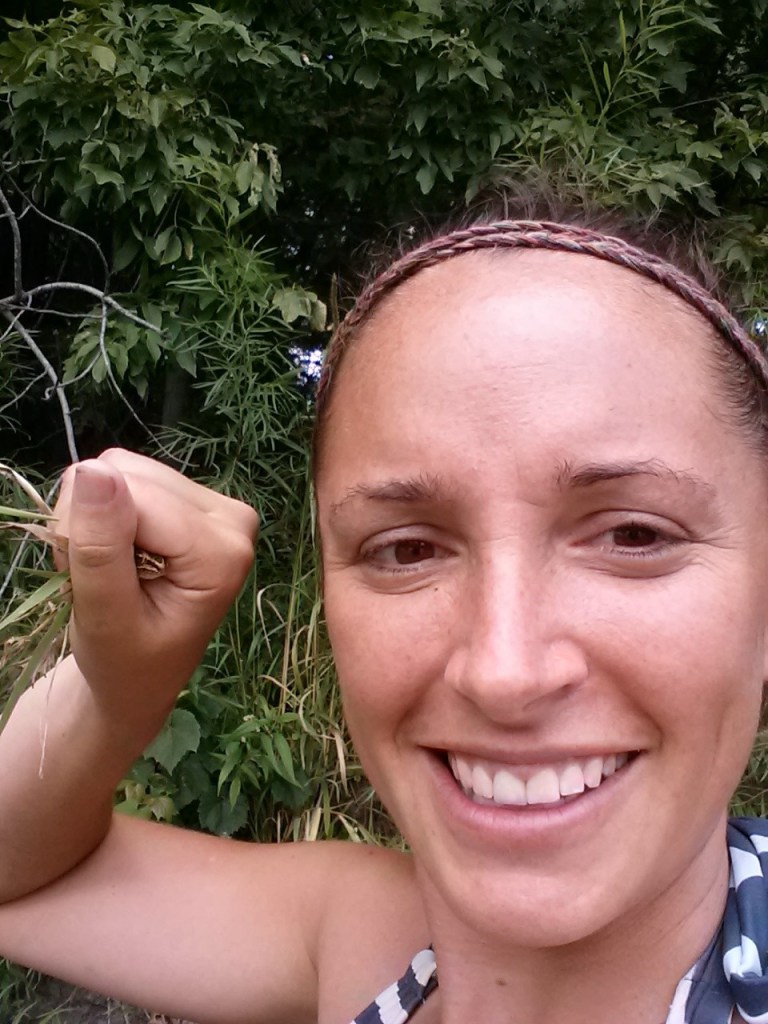
He was impressed. I’d been right.
He told me to hook it through the lip. He’d caught one too. We cast our lines into the spots he knew best.
I waded into the river, knee-deep now, pole in hand, letting the weighted frog sink. I’d never fished with one before. The guilt came, dull but undeniable. Just the day before, I’d written in my journal that guilt often signals when you’re compromising a value.
And here I was, doing exactly that.
I’d hurt another living thing not to look foolish or incapable. To earn credit for a place at the table of belonging. At the moment, I didn’t see another option. I wondered if this is how harm becomes possible—through small decisions framed as necessity.
My line snagged. I pulled. Nothing. I moved downriver to free it, irritated, already preparing to break the line—when it pulled back.
Hard.
A fish!
Jack barked instructions like a drill sergeant. “Give it slack. Tire him out. Be patient.”
I did exactly that. My bicep burned, then my forearm, then I switched arms. I reeled slowly, carefully. One of my biggest pet peeves is watching fishermen reel too fast, excitement snapping the line before they ever see what they had. I would not do that.
Little by little, the fish came closer. Eventually, exhausted, it surfaced.
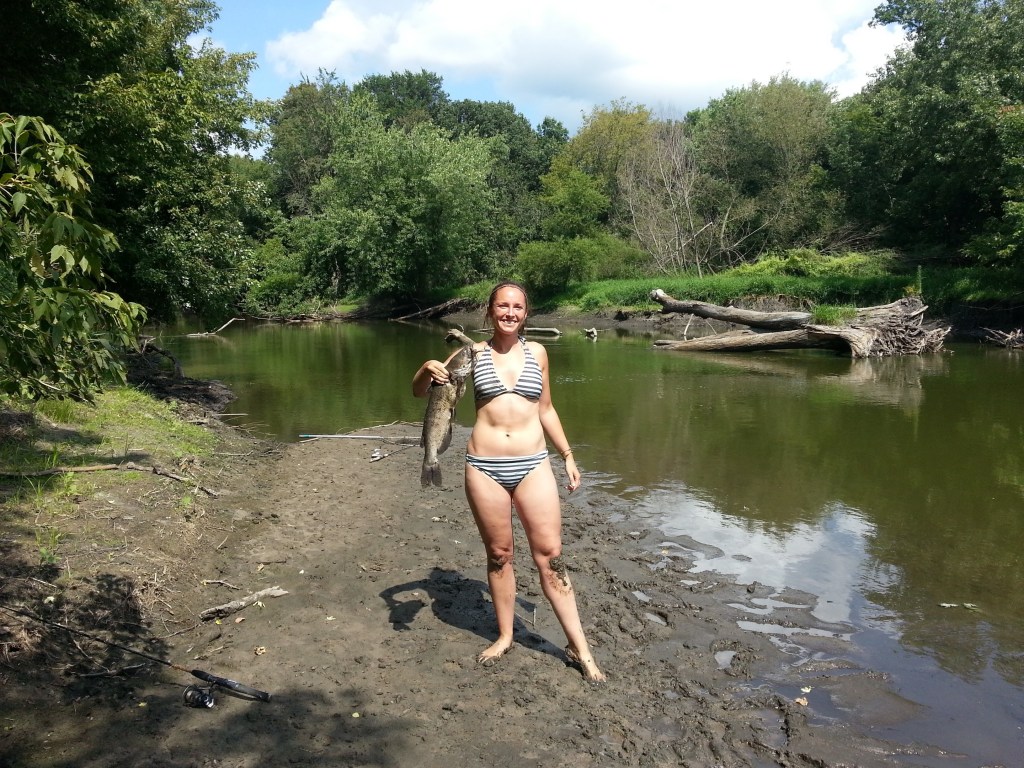
I whooped at its size. Jack did too. He said he’d never seen a catfish that big before.
We pulled it onto the bank, dancing around it like kids at a cracked-open piñata. I grabbed my camera, took a photo of Jack holding it, then handed it back.

“Hurry,” I said. My muscles trembling, I couldn’t hold something that heavy for long.
However accomplished I felt, I left the river carrying more than the weight of the fish. I realized how little resistance it takes before I comply. To do the task. To stay worthy. To belong. The system didn’t have to force me. It didn’t even need to. I had entered it willingly, the hook already set—choosing to bite, fully aware of the rules of the game, drawn by structure, clarity, and the quiet pull of belonging.
 Going On 40